

Just like humans, dogs can suffer from teeth and gum issues, and gingivitis is one of the earliest and most common stages.
It can cause red, swollen gums, bad breath, and discomfort when eating or chewing.
The good news is that gingivitis can often be prevented or even reversed with proper care and attention.
In this post, we will explore 5 ways to support gingivitis in dogs, starting with its causes.
Let’s dive in!
What Causes Gingivitis in Dogs?
Gingivitis in dogs is typically caused by the buildup of plaque and tartar on the teeth and along the gumline.
When bacteria accumulate, they inflame the gums, leading to redness, swelling, and bleeding.
Other contributing factors include poor diet, lack of regular dental cleaning, or underlying health issues such as diabetes or immune deficiencies.
If left untreated, gingivitis can progress to periodontal disease, resulting in pain, tooth loss, and potential systemic health issues.
5 Ways to Support Dog Gingivitis
1. Add Dog Dental Greens to Their Routine
One of the easiest and most effective ways to support your dog’s oral health is with Dog Dental Greens.
These dental chews or powders are formulated to freshen breath, reduce plaque buildup, and promote healthy gums through natural ingredients like chlorophyll, parsley, and enzymes that help break down tartar.
They not only clean your dog’s teeth but also make dental care something your pup actually enjoys.
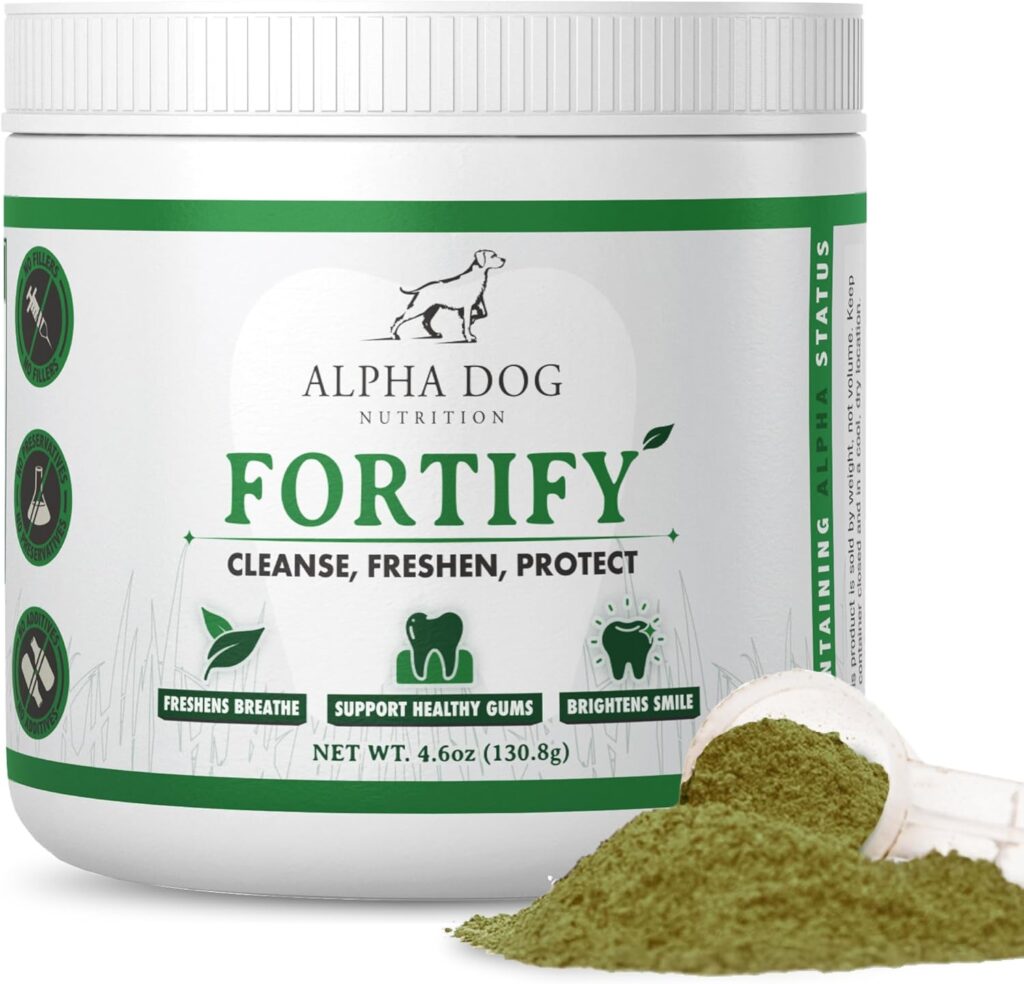
Out of all of the dental greens my dog has tried, his personal favorite is Alpha Dog’s Fortify Greens Powder.
Alpha Dog’s Dental Greens are a game-changer for dogs struggling with gingivitis, thanks to their professional-grade, PhD-formulated blend.
This powder supports dog gingivitis by effectively removing plaque and tartar while also freshening breath naturally.
With ingredients like kelp and probiotics, it not only cleans teeth but also supports healthy gums.
Its ease of use is another plus; simply sprinkle it over your dog’s food daily to maintain optimal oral health without the need for brushing.
Simply follow the directions on the back and you’re good to go!
2. Brush Your Dog’s Teeth Regularly
Daily or even weekly toothbrushing can make a major difference in preventing gingivitis.
Use a soft-bristled toothbrush and a dog-safe toothpaste, never human toothpaste, as it can be toxic to pets.
This habit removes plaque before it hardens into tartar, helps maintain healthy gums, and allows you to monitor any changes in your dog’s mouth early on.
3. Provide Dental Chews and Toys
Dental chews and toys not only keep your dog entertained but also mechanically help clean teeth and massage gums.
Look for options designed specifically for dental health: these often have textured surfaces or grooves that scrape away plaque while your dog chews.
Chewing also stimulates saliva production, which naturally helps wash away bacteria and food debris.
4. Schedule Regular Vet Dental Checkups
Professional cleanings are vital for maintaining your dog’s oral health.
Your veterinarian can remove tartar that home brushing can’t reach and check for early signs of gum disease.
Depending on your dog’s age and dental condition, professional cleanings may be recommended once or twice a year to prevent progression from gingivitis to more severe dental disease.
5. Feed a Nutrient-Rich Diet
A healthy diet supports your dog’s immune system and gum health from within.
Choose high-quality dog food rich in vitamins C and E, omega-3 fatty acids, and minerals that strengthen tissue and reduce inflammation.
Some dental diets are specifically formulated to reduce plaque and tartar formation, providing an extra layer of protection against gingivitis.
Support Dog Gingivitis
Gingivitis in dogs is preventable with the right care, consistency, and nutrition.
From brushing and professional cleanings to giving your dog dental greens, every small step makes a big difference in maintaining their oral health.
By incorporating these habits into your routine, you’ll help your dog enjoy a happier, healthier smile for years to come.
Thank you for reading!
Affiliate Disclosure
Some of the links on this site are affiliate links. This means that if you click on the link and purchase the item, we may receive an affiliate commission at no extra cost to you. I only recommend products or services that I believe will add value to my readers, however some (not all) do pay us to be on this blog. Your support and theirs helps keep this blog running, and I genuinely appreciate it.
Medical Disclaimer
The information provided on this website is for educational purposes only and is not intended as medical advice. The content shared here is not written by a licensed veterinarian, and it should not be used as a substitute for professional veterinary diagnosis, treatment, or advice. Always consult with your veterinarian or other qualified pet healthcare provider before starting any new treatment or making changes to your pet’s health regimen.