

Bad breath in dogs is not just a nuisance; it’s often an indicator of underlying health issues that need attention.
Understanding the causes and exploring effective remedies can help you manage your furry friend’s oral hygiene and improve their overall well-being.
In this post, we are going to explore 5 ways to ease dog bad breath, starting with what causes horrible dog breath.
Let’s dive in!
What Causes Horrible Dog Breath?
Several factors contribute to bad breath in dogs, including:
- Dental Problems: The most common cause of bad breath in dogs is poor dental hygiene. Plaque buildup, tartar, and gum disease can harbor harmful bacteria that produce foul odors.
- Diet: Certain foods can contribute to stinky breath, especially those that are particularly pungent or rich.
- Digestive Issues: Problems with digestion, such as too much bacterial growth in the intestines or problems with absorbing nutrients, can cause bad breath.
- Oral Disease: Besides gum disease, other oral health issues like infections or tooth decay can lead to bad breath.
- Underlying Health Conditions: Conditions like diabetes, kidney disease, or liver problems can manifest symptoms that include bad breath.
Knowing the causes helps in addressing the root of the problem.
5 Ways to Ease Dog Bad Breath
1. Dog Dental Powder
Dog dental powders are an excellent way to combat bad breath at its source.
These powders often contain enzymes that help break down plaque and tartar, reducing the bacteria that cause bad odors.
Simply sprinkle the powder over your dog’s food as directed. This not only helps in cleaning the teeth and gums but also promotes fresher breath with regular use.
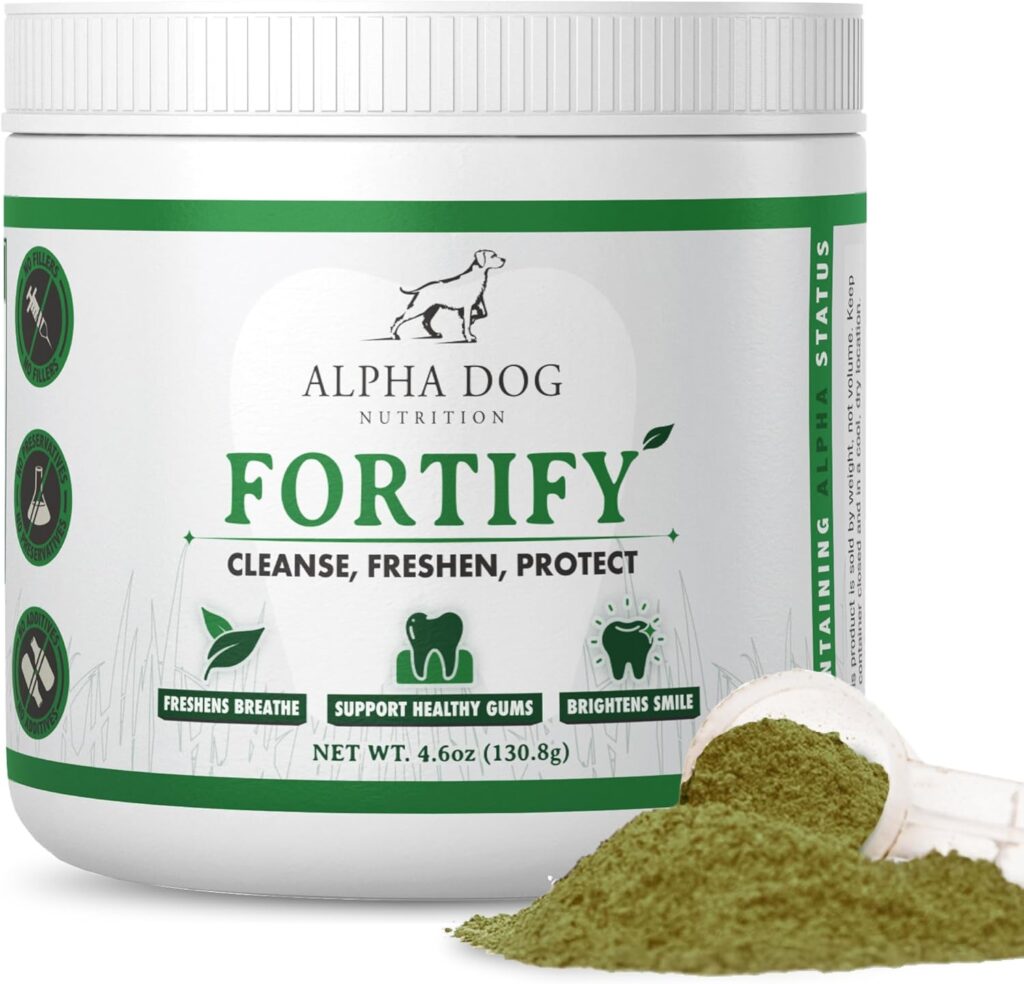
Out of all of the dental powders my dog has tried, Alpha Dog’s new Fortify Dog Dental Powder is his favorite (and the best).
Fortify Dental Powder is a top choice for combating bad breath in dogs, thanks to its professional-grade, PhD-formulated blend.
This powder tackles the root causes of bad breath by effectively removing plaque and tartar while also freshening breath naturally.
With ingredients like kelp and probiotics, it not only cleans teeth but also supports healthy gums.
Its ease of use is another plus; simply sprinkle it over your dog’s food daily to maintain optimal oral health without the need for brushing.
Simply follow the directions on the back and you’re good to go!
2. Regular Teeth Brushing
Brushing your dog’s teeth is one of the most direct methods to combat bad breath.
Use a toothbrush made specifically for dogs along with pet-safe toothpaste.
Aim to brush your dog’s teeth several times a week, if not daily, to remove food particles and bacteria that lead to bad breath.
3. Healthy Diet
Feeding your dog a balanced, high-quality diet can improve their overall digestive health and contribute to better breath.
Avoid giving your dog overly processed foods and talk to your vet about supplements that can aid digestion and reduce bad breath.
4. Dental Chews and Toys
Dental chews and toys not only help keep your dog entertained but also promote dental health.
These products are designed to reduce plaque and freshen breath as your dog chews.
Make sure to select chews that are appropriate for your dog’s size and chew strength.
5. Regular Veterinary Checkups
Regular check-ups with the veterinarian are crucial for maintaining your dog’s oral and overall health.
A vet can provide professional cleanings, check for any signs of oral disease or underlying health issues, and offer specific advice tailored to your dog’s needs.
Dog Bad Breath Support
Tackling the issue of bad breath in your dog involves a combination of good oral hygiene practices and overall health management.
By following these five steps, you can help ensure your dog’s mouth stays clean and their breath stays fresh.
Remember, persistent bad breath can sometimes indicate a more serious underlying condition, so it’s important to consult with a veterinarian if the problem continues.
Thank you for reading!
Affiliate Disclosure
Some of the links on this site are affiliate links. This means that if you click on the link and purchase the item, we may receive an affiliate commission at no extra cost to you. I only recommend products or services that I believe will add value to my readers, however some (not all) do pay us to be on this blog. Your support and theirs helps keep this blog running, and I genuinely appreciate it.
Medical Disclaimer
The information provided on this website is for educational purposes only and is not intended as medical advice. The content shared here is not written by a licensed veterinarian, and it should not be used as a substitute for professional veterinary diagnosis, treatment, or advice. Always consult with your veterinarian or other qualified pet healthcare provider before starting any new treatment or making changes to your pet’s health regimen.