
If you’re a dog owner, you’ve likely encountered the frustrating problem of urine spots on your lawn.
These unsightly yellow or brown patches can be challenging to prevent, especially for dogs that frequent the yard.
While dog urine contains nitrogen, which can be beneficial for plants in small amounts, concentrated urine in one spot can cause damage to the grass.
Understanding the causes of urine spots and how to address them can help you maintain a healthy, lush lawn.
In this blog, we’ll explore five effective ways to ease dog urine spots and keep your yard looking beautiful.
Let’s dive in!
What Causes Dog Urine Spots on the Lawn?
The primary cause of dog urine spots is the high concentration of nitrogen and salts found in dog urine.
When a dog pees on the grass, the nitrogen in the urine acts like a fertilizer, but in excess, it “burns” the grass.
This results in yellow or brown patches where the urine was concentrated.
Additionally, the pH level of dog urine can sometimes be acidic, which further damages the grass.
Female dogs, in particular, may cause more concentrated spots due to the way they urinate, often creating a larger area of contact with the grass.
Understanding the causes of urine spots helps in finding ways to manage and prevent further damage to your lawn.
5 Ways to Ease Dog Urine Spots on Your Lawn
1. Use a Dog Urine Neutralizer Powder
A dog urine neutralizer powder is one of the best ways to reduce the impact of dog urine on your lawn.
These specially formulated powders are designed to neutralize the harmful effects of dog urine by balancing the pH and reducing nitrogen concentration in the soil.
By sprinkling the powder in food that your dog eats, you can help protect the grass and prevent unsightly brown patches.
Many of these products contain natural ingredients like cranberry and probiotics that break down the harmful elements in urine, promoting a healthier lawn without harming your pet.
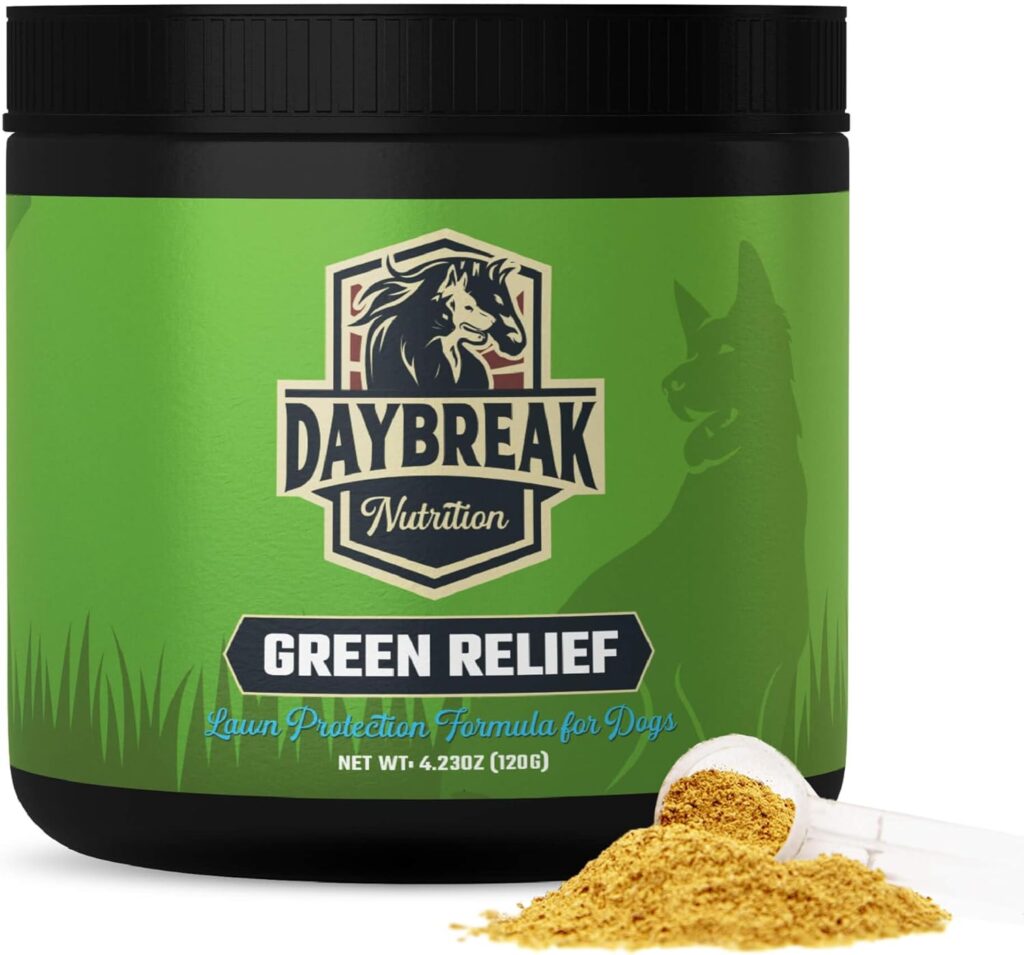
Out of all the urine neutralizers my dog has tried, Daybreak’s new Green Relief is his personal favorite.
Green Relief is the perfect solution to protect your lawn from the damage caused by dog urine.
Formulated with L-Methionine, Yucca, cranberry extract, and probiotics, it naturally balances your dog’s urinary pH and neutralizes nitrogen compounds that burn grass, resulting in a lush, green yard.
This easy-to-use powder simply mixes into your dog’s food, ensuring consistent dosing without the hassle of water additives or tablets.
By preventing urine damage at the source, Green Relief saves you time and money on lawn repairs while allowing your dog to enjoy your yard freely.
Simply follow the directions on the back and you’re good to go!
2. Encourage Your Dog to Pee in a Designated Area
One of the most effective ways to limit urine spots on your lawn is to train your dog to urinate in a specific area.
Designating a “pee zone” covered with mulch, gravel, or sand can help contain the damage to a small, manageable spot.
This allows the rest of your lawn to remain unaffected by urine, keeping it green and healthy.
Training your dog to use this designated area consistently can take some time and patience, but it’s well worth the effort in the long run.
3. Water Down Urine Spots Immediately
After your dog urinates on the lawn, watering the spot immediately can help dilute the urine and reduce its damaging effects.
The water helps wash away the excess nitrogen and salts, preventing them from burning the grass.
You can carry a watering can or hose to the spot right after your dog finishes, or even keep a bottle of water handy during walks.
Watering down urine spots can significantly lessen the damage and promote faster recovery for your grass.
4. Fertilize Your Lawn Regularly
A well-fertilized lawn is more resilient to damage caused by dog urine.
Fertilizing your lawn with a balanced fertilizer ensures that your grass has the nutrients it needs to stay healthy and recover from any spots that do occur.
Look for a fertilizer with a higher potassium content, as it can help your lawn resist damage from excess nitrogen in the urine.
Fertilizing also encourages overall grass growth, helping fill in any areas that have been damaged by urine spots.
5. Train Your Dog to Drink More Water
Dehydration can lead to more concentrated urine, which can exacerbate urine spots on your lawn.
Encouraging your dog to drink more water can help dilute their urine, reducing the amount of nitrogen and salts in each urination.
Make sure your dog always has access to fresh, clean water, especially during hot weather or after exercise.
You can also add wet food to their diet or use ice cubes as a treat to encourage them to drink more.
Ease Dog Urine Spots
Dog urine spots on the lawn are a common issue for dog owners, but with the right strategies, they can be managed effectively.
Using a dog urine neutralizer powder, training your dog to pee in a designated area, watering down urine spots, fertilizing your lawn, and encouraging hydration are all simple ways to reduce the impact of dog urine on your grass.
By implementing these techniques, you can maintain a healthy, green lawn while allowing your dog the freedom to enjoy your yard.
If urine spots persist or worsen, consider consulting with a lawn care professional or veterinarian for additional advice.
Thank you for reading!
Affiliate Disclosure
Some of the links on this site are affiliate links. This means that if you click on the link and purchase the item, we may receive an affiliate commission at no extra cost to you. I only recommend products or services that I believe will add value to my readers, however, some (not all) do pay us to be on this blog. Your support and theirs help keep this blog running, and I genuinely appreciate it.
Medical Disclaimer
The information provided on this website is for educational purposes only and is not intended as medical advice. This blog or the writer is not a licensed healthcare professional, and the content should not be used as a substitute for professional medical diagnosis, treatment, or advice. Always consult with your physician or other qualified healthcare provider before starting any new treatment or making any changes to your pet’s healthcare routine.