
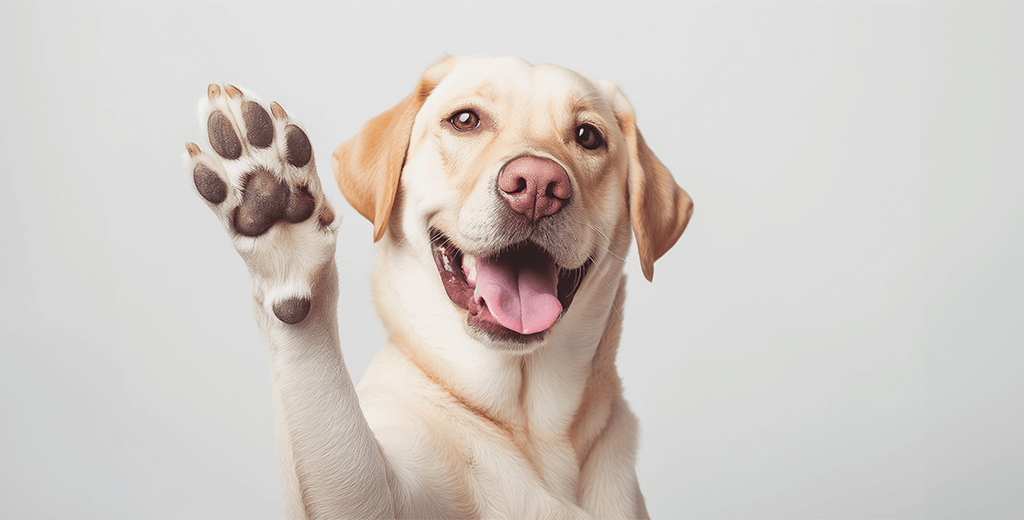
Watching your dog turn away from their favorite chew toy or noticing an unusually foul odor when they give you “kisses” can be a quiet warning sign.
Periodontal issues—often called gum deterioration or oral decline—affect the vast majority of dogs by the time they reach adulthood.
It is a progressive condition that starts invisibly beneath the gum line, causing chronic inflammation and hidden discomfort.
Because dogs are genetically wired to hide physical vulnerability, managing their oral environment early is essential to protecting their comfort, their stamina, and their ability to enjoy their daily meals.
In this post, we will explore 5 ways to support periodontal issues in dogs, starting with its causes.
Let’s dive in!
What Causes Periodontal Decline in Dogs?
Oral deterioration is a step-by-step process driven entirely by the invisible environment inside your dog’s mouth.
The primary factors that trigger this breakdown include:
- Biofilm Accumulation: Every time your dog eats, a sticky film of glycoprotein and extracellular polysaccharides (plaque) forms over the teeth. If not disrupted, it hardens into rocky tartar within 48 hours.
- Subgingival Bacteria: As tartar builds up, it pushes under the gum line. This dark, oxygen-poor environment is the perfect breeding ground for harmful anaerobic bacteria.
- Immune Overreaction: The dog’s immune system sends white blood cells to fight the bacteria under the gums. This chronic inflammatory response inadvertently destroys the local tissue and structural bone holding the teeth in place.
- Anatomical Crowding: Toy breeds (like Chihuahuas, Yorkies, and Pugs) have the same number of teeth as large dogs but crowded into tiny mouths. This tightly packed layout traps food and debris effortlessly, accelerating tissue irritation.
- Lack of Mechanical Abrasion: Modern soft diets or a lack of safe chewing outlets mean teeth rarely experience the natural scraping action required to disrupt plaque before it mineralizes.
5 Ways to Support Canine Oral Health
Managing oral decline requires a daily strategy to safely lower the bacterial burden and support the local structural tissues.
1. Dog Dental Greens Supplement
The most effective way to address oral decline is to change the chemical environment of the mouth from the inside out.
A premium Dog Dental Greens Supplement is an exceptional tool because it works systemically through your dog’s saliva.
Ingredients like kelp, rosemary, and probiotics contain natural enzymes and micronutrients that alter the composition of the saliva.
When your dog eats their daily meals, these green superfoods work naturally to soften existing tartar and prevent new plaque from bonding to the enamel.
It provides an effortless, stress-free barrier against bacterial accumulation without forcing you to struggle with a toothbrush every single night.
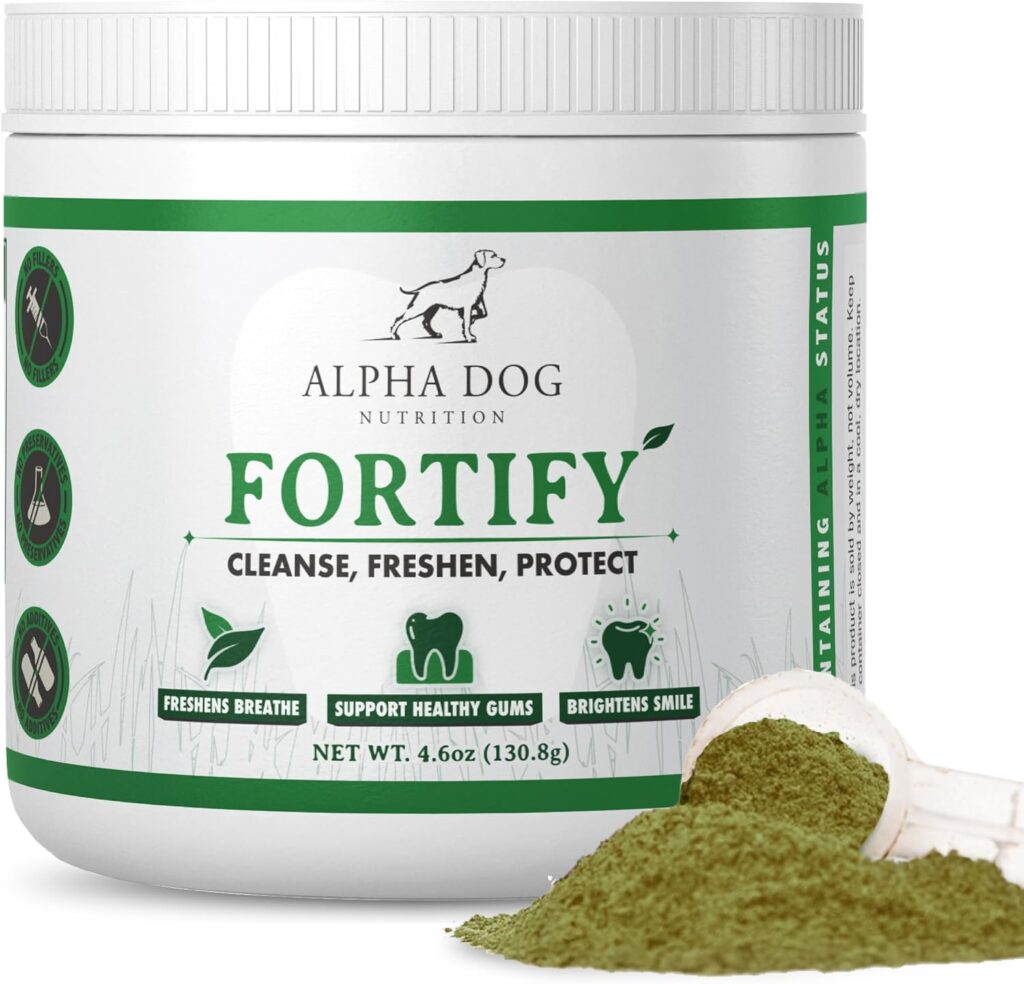
Out of all of the dental greens my dog has tried, his personal favorite is Alpha Dog’s Fortify.
Alpha Dog’s Fortify Dental Powder is a professional-grade green supplement that effortlessly transforms your pup’s oral health by knocking away stubborn plaque and tartar right at the food bowl.
Formulated by PhD experts and trusted by veterinarians, this easy-to-use powder blends natural kelp, probiotics, and advanced tooth-cleaning ingredients to safely freshen bad breath and support resilient gums without the stress of daily brushing.
Simply sprinkle it over your dog’s food to naturally shift their oral chemistry, giving your furry friend clean teeth, an optimal mouth environment, and a bright, healthy smile.
2. Introduce Active Dental Chews
To physically disrupt the stubborn biofilm on the surface of the teeth, your dog needs safe, mechanical abrasion.
Natural, structural chews—such as bully sticks or vet-approved rubber dental toys—force your dog to bite down deeply.
As the tooth sinks into the material, it acts like a natural squeegee, scraping away soft plaque before it can harden into rocky tartar.
This active chewing also stimulates healthy saliva flow, which naturally flushes loose debris and bacteria out of the mouth.
3. Implement a Soothing Kelp Water Additive
For dogs experiencing gum sensitivity, direct friction can be uncomfortable.
A simple kelp-based water additive allows you to deliver continuous oral support throughout the day.
Every time your dog takes a drink, the natural minerals and organic compounds coat the oral cavity.
This creates an uninviting environment for harmful bacteria, helping to freshen their breath continuously and keep the bacterial “load” inside the mouth at a manageable level.
4. Switch to an Immune-Supporting, Whole-Food Diet
The health of the gums is directly tied to your dog’s systemic immune response.
Diets high in simple starches can leave a sticky residue on the teeth, actively feeding oral bacteria.
Transitioning toward a nutrient-dense, whole-food diet rich in antioxidants helps support a normal, balanced inflammatory response.
Providing clean proteins and essential fatty acids ensures that the body has the structural building blocks necessary to maintain healthy, resilient gum tissue.
5. Regular Subgingival Oral Flushes
If your dog’s gums are prone to trapping debris, a gentle oral rinse or flush containing natural cleansers can provide immediate relief.
Applying a small amount of a pet-safe, alcohol-free oral rinse along the upper gum line helps wash away trapped food particles after meals.
This prevents the rapid localized bacterial blooms that lead to tissue irritation, keeping the mouth feeling fresh, clean, and comfortable.
Support Periodontal Issues In Dogs
Supporting a dog through oral decline is a journey of daily consistency.
By utilizing a premium dental greens supplement to change the mouth’s chemistry and providing safe mechanical chewing outlets, you can easily protect your companion’s comfort and keep their breath fresh.
Thank you for reading, and here is to your pup’s bright, clean, and happy smile!
Affiliate Disclosure
Some of the links on this site are affiliate links. This means that if you click on the link and purchase the item, we may receive an affiliate commission at no extra cost to you. I only recommend products or services that I believe will add value to my readers, however some (not all) do pay us to be on this blog. Your support and theirs helps keep this blog running, and I genuinely appreciate it.
Medical Disclaimer
The information provided on this website is for educational purposes only and is not intended as medical advice. The content shared here is not written by a licensed veterinarian, and it should not be used as a substitute for professional veterinary diagnosis, treatment, or advice. Always consult with your veterinarian or other qualified pet healthcare provider before starting any new treatment or making changes to your pet’s health regimen.