
Teary eyes in cats can be concerning for pet owners, as they may indicate an underlying issue requiring attention.
Understanding the causes of watery eyes and knowing how to address them can help ensure your feline friend remains healthy and comfortable.
In this post, we are going to explore 5 ways to ease teary eyes in cats, along with what causes watery eyes.
Let’s dive in!
What Causes Teary Eyes in Cats?
Watery or teary eyes in cats can stem from various factors, including:
- Allergies: Environmental allergens, such as pollen, dust, or mold, can cause irritation and lead to excessive tearing.
- Infections: Viral or bacterial infections, like feline herpesvirus or conjunctivitis, can result in watery eyes and other symptoms.
- Blocked Tear Ducts: Tear ducts can become blocked or narrowed, preventing proper drainage and causing tears to overflow.
- Foreign Objects: Small particles or foreign bodies in the eye can irritate the surface, leading to increased tearing.
- Underlying Health Issues: Conditions like dental disease or respiratory infections can also manifest as watery eyes.
5 Ways to Ease Teary Eyes in Cats
1. Take an L-Lysine Supplement
One of the best ways to support your cat’s eye health is by incorporating an L-lysine supplement into their diet.
L-lysine is an amino acid known for its ability to boost the immune system and reduce the severity of viral infections, particularly feline herpesvirus, which can lead to watery eyes.
Administer L-lysine supplements as directed by your veterinarian.
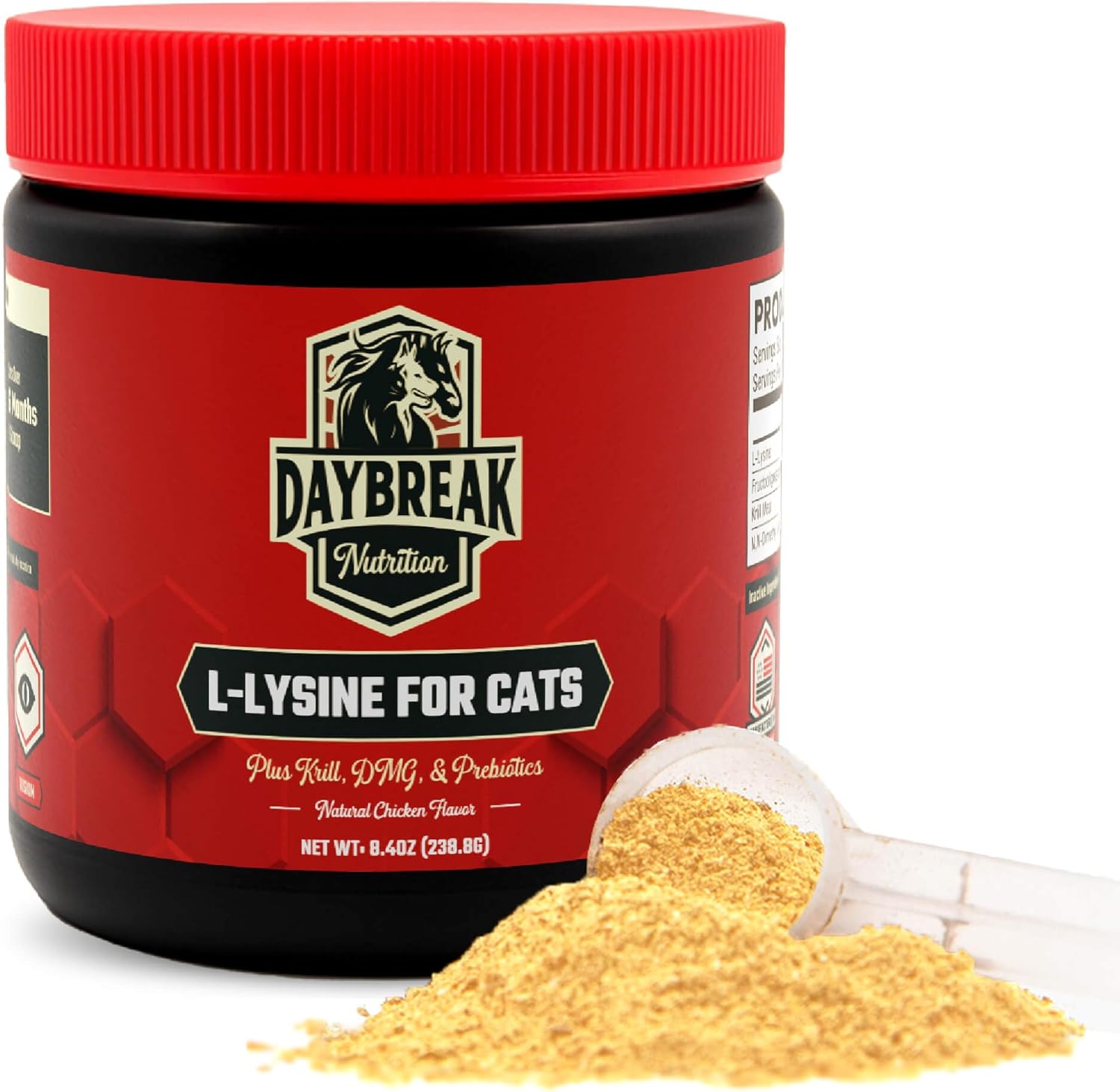
Out of all of the lysine supplements my cat has tried, she loves Daybreak Nutrition’s L-Lysine for Cats.
Daybreak Nutrition’s L-Lysine for Cats is an excellent choice for addressing teary eyes, as it boosts the immune system and provides essential respiratory support.
Each scoop contains 900 mg of L-lysine, along with prebiotics, krill, and DMG, all of which work together to enhance gut health and overall immune defense.
The convenient powder form makes it easy to incorporate into your cat’s diet, ensuring optimal absorption and digestion.
Simply follow the directions on the back and you’re good to go!
2. Keep Your Cat’s Eyes Clean
Maintaining good eye hygiene is crucial for managing watery eyes.
Cleaning your cat’s eyes regularly can help remove debris and prevent irritation.
Use a soft, damp cloth or cotton ball to gently wipe away any discharge from your cat’s eyes.
Be sure to use a separate cloth for each eye to avoid cross-contamination.
3. Monitor Allergens
If allergies are suspected to be the cause of teary eyes, monitoring and minimizing exposure to allergens can be beneficial.
Keep your home clean by regularly vacuuming and dusting.
Consider using air purifiers to reduce airborne allergens and avoid using strong cleaning products that may irritate your cat’s eyes.
4. Provide a Comfortable Environment
Creating a comfortable environment for your cat can help minimize stress and irritation that may contribute to teary eyes.
Ensure your cat has a quiet, stress-free space with plenty of natural light and fresh air.
Avoid exposing them to smoke, strong odors, or harsh chemicals.
5. Consult Your Veterinarian
If your cat’s teary eyes persist or are accompanied by other symptoms, such as redness, swelling, or discharge, consulting your veterinarian is essential.
Your vet can perform a thorough examination to determine the underlying cause and recommend appropriate treatments, such as medications or topical ointments, to alleviate symptoms and promote healing.
Support Your Cat’s Teary Eyes
Easing watery eyes in cats involves a combination of immune support, hygiene, allergy management, and professional guidance.
By using an L-lysine supplement, keeping their eyes clean, monitoring allergens, providing a comfortable environment, and consulting your veterinarian, you can effectively support your cat’s eye health and overall well-being.
Early intervention and consistent care are key to ensuring your feline friend remains happy and healthy.
Thank you for reading!
Affiliate Disclosure
Some of the links on this site are affiliate links. This means that if you click on the link and purchase the item, we may receive an affiliate commission at no extra cost to you. I only recommend products or services that I believe will add value to my readers, however, some (not all) do pay us to be on this blog. Your support and theirs help keep this blog running, and I genuinely appreciate it.
Medical Disclaimer
The information provided on this website is for educational purposes only and is not intended as medical advice. This blog or the writer is not a licensed healthcare professional, and the content should not be used as a substitute for professional medical diagnosis, treatment, or advice. Always consult with your physician or other qualified healthcare provider before starting any new treatment or making any changes to your pet’s healthcare routine.